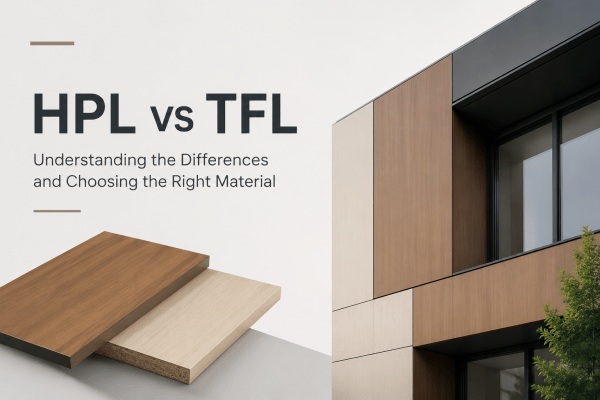
When selecting decorative surfacing materials for furniture, cabinetry, wall panels, countertops, and commercial interiors, two common options often come up: High-Pressure Laminate (HPL) and Low-Pressure Laminate (LPL). While both products are designed to enhance the appearance of substrates and provide surface protection, they differ significantly in their manufacturing processes, durability, performance, and applications.
Understanding the differences between HPL and LPL can help architects, designers, furniture manufacturers, and project owners choose the most suitable material for their specific needs. This guide explains the key distinctions between HPL and LPL and highlights where each material performs best.
What Is HPL?
High-Pressure Laminate (HPL) is a decorative surfacing material manufactured by compressing multiple layers of kraft paper and decorative paper impregnated with thermosetting resins under high pressure and high temperature.
The resulting laminate sheet is highly durable and can be bonded to substrates such as MDF, particleboard, plywood, or other composite panels.
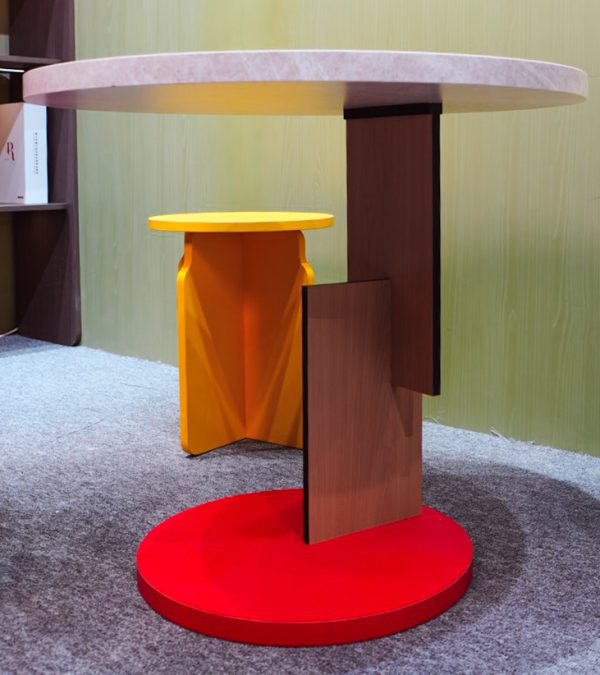
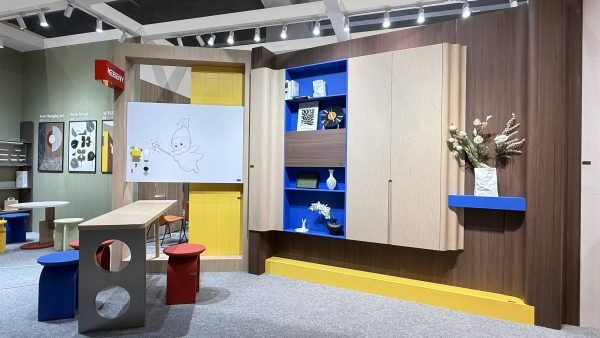
HPL is widely used in:
- Commercial furniture
- Office workstations
- Hospital interiors
- Educational facilities
- Retail fixtures
- Wall cladding
- Countertops
- Laboratory furniture
What Is LPL?
Low-Pressure Laminate (LPL), often referred to as melamine board, is produced by directly fusing decorative paper impregnated with melamine resin onto a substrate such as particleboard or MDF under relatively lower pressure.
Unlike HPL, LPL does not create a separate laminate sheet before bonding. Instead, the decorative layer becomes an integral part of the panel during manufacturing.
Common applications include:
- Residential furniture
- Wardrobes
- Shelving systems
- Ready-to-assemble furniture
- Interior cabinetry
HPL vs LPL: Manufacturing Process
HPL Manufacturing
HPL is produced through a multi-step process:
- Kraft paper layers are saturated with phenolic resin.
- Decorative paper is impregnated with melamine resin.
- Multiple layers are stacked together.
- The stack is compressed under high pressure and high temperature.
- A dense and durable laminate sheet is formed.
- The sheet is later bonded to a substrate.
This process creates a highly resistant surface suitable for demanding environments.
LPL Manufacturing
For LPL production:
- Decorative paper is treated with melamine resin.
- The paper is placed directly onto MDF or particleboard.
- Heat and pressure fuse the decorative layer to the substrate.
The process is simpler and more cost-effective but produces a thinner and less durable surface.
HPL vs LPL: Durability Comparison
Wear Resistance
HPL generally offers superior resistance to abrasion, impact, scratches, and daily wear.
LPL performs well in low-traffic residential settings but may show signs of wear more quickly in demanding environments.
Moisture Resistance
HPL provides better moisture resistance due to its dense construction and multiple resin-treated layers.
LPL can be vulnerable to moisture damage if the decorative surface or edges become compromised.
Impact Resistance
HPL is designed to withstand heavy use and accidental impacts, making it suitable for commercial and public spaces.
LPL is better suited for areas with moderate use and lower impact exposure.
Heat Resistance
HPL typically offers better heat resistance than LPL, making it a preferred choice for countertops and work surfaces.
Appearance and Design Options
Both HPL and LPL are available in a wide range of:
- Woodgrain patterns
- Stone effects
- Solid colors
- Metallic finishes
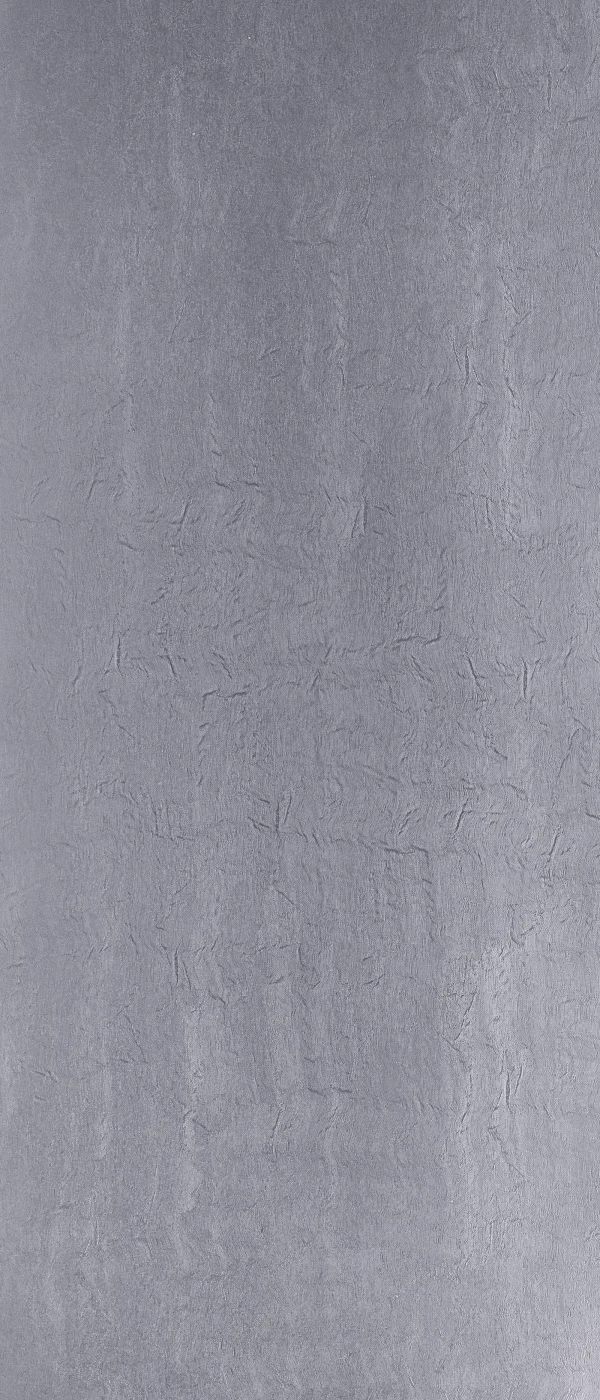
- Textured surfaces
- Matte and glossy finishes
Modern manufacturing technologies allow both materials to achieve highly realistic decorative effects.
However, HPL often offers greater design flexibility, deeper textures, and more premium surface finishes.
Cost Comparison
One of the primary advantages of LPL is its lower cost.
Because LPL is manufactured directly onto the substrate, production costs are generally lower than those of HPL.
Sustainability Considerations
Sustainability is becoming increasingly important in modern interior design and construction projects.
Many HPL manufacturers are investing in environmentally responsible production processes. For example, REXIN Laminate is GREENGUARD-certified, supporting healthier indoor air quality. Additionally, the decorative papers used in REXIN Laminate products come from FSC-certified sources, promoting responsible forest management and sustainable sourcing practices.
When selecting decorative surfacing materials, certifications and responsible sourcing can play an important role in achieving sustainability goals and green building standards.
Quick Comparison Table
| Feature | HPL | LPL |
|---|---|---|
| Manufacturing Method | Separate laminate sheet bonded to substrate | Decorative paper fused directly to substrate |
| Durability | Excellent | Moderate |
| Scratch Resistance | High | Moderate |
| Impact Resistance | High | Lower |
| Moisture Resistance | Better | Moderate |
| Heat Resistance | Better | Moderate |
| Cost | Higher | Lower |
| Commercial Use | Highly Suitable | Limited |
| Residential Use | Excellent | Excellent |
| Service Life | Longer | Shorter |
Which One Should You Choose?
The choice between HPL and LPL ultimately depends on the intended application, performance requirements, and project budget.
If durability, long-term performance, and resistance to wear are top priorities, HPL is often the better investment. It performs exceptionally well in commercial, institutional, and high-traffic environments.
If cost efficiency is the primary concern and the application involves light-to-moderate residential use, LPL can provide an attractive and practical solution.
Conclusion
Both HPL and LPL have valuable roles in modern interior design and furniture manufacturing. While LPL offers an economical option for residential applications, HPL delivers superior durability, moisture resistance, impact resistance, and overall performance for demanding environments.
By understanding the differences between these two materials, architects, designers, manufacturers, and property owners can make informed decisions that balance aesthetics, performance, sustainability, and budget requirements.
For more information about HPL products, custom decorative solutions, and sustainable laminate options, contact REXIN HPL at Export@rexinhpl.com. The REXIN team is ready to help you select the ideal laminate solution for your next project.