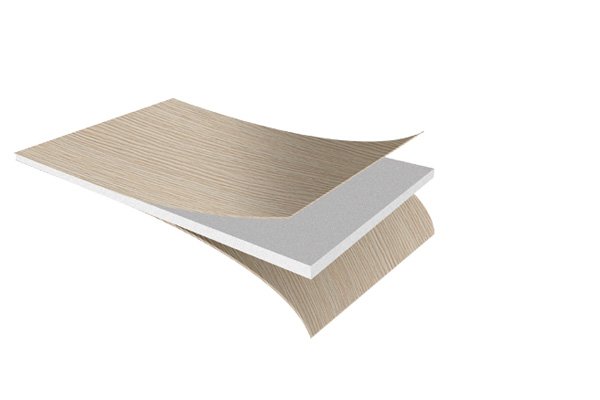
When evaluating fire safety performance of building materials—such as interior wall panels, ceiling systems, and decorative surfaces—two key indicators are used in ASTM E84 testing: Flame Spread Index (FSI) and Smoke Developed Index (SDI).
Although they are often listed together, they measure two different aspects of how a material behaves in a fire.
What is Flame Spread Index (FSI)?
The Flame Spread Index measures how quickly flames spread across the surface of a material when exposed to fire.
In simple terms, it answers:
“How fast will fire travel across this surface?”
Key points:
- Lower value = slower flame spread = better fire safety performance
- Higher value = faster flame spread = higher risk
- Commonly used in the United States under ASTM E84 standard
Typical classification:
- Class A: 0–25 (best performance)
- Class B: 26–75
- Class C: 76–200
Why it matters:
A lower flame spread index helps slow fire growth, giving more time for evacuation and fire control.
What is Smoke Developed Index (SDI)?
The Smoke Developed Index measures the amount of smoke produced when a material burns.
It answers:
“How much smoke will be generated during combustion?”
Key points:
- Lower value = less smoke = safer evacuation conditions
- Higher value = more smoke = reduced visibility and higher inhalation risk
- Also tested under ASTM E84
Typical reference:
- For Class A materials, SDI is generally within 0–450
Why it matters:
In real fire scenarios, smoke is often more dangerous than flames because it:
- Reduces visibility
- Slows evacuation
- Increases respiratory hazards
Flame Spread Index vs Smoke Developed Index
| Factor | Flame Spread Index (FSI) | Smoke Developed Index (SDI) |
|---|---|---|
| What it measures | Speed of flame spread | Amount of smoke produced |
| Main concern | Fire growth on surface | Visibility & toxicity risk |
| Lower value means | Slower fire spread | Less smoke |
| Safety impact | Controls fire expansion | Improves evacuation safety |
Why both values must be considered
A material cannot be evaluated by only one indicator.
For example:
- A material may have low flame spread but still produce heavy smoke
- Another may generate low smoke but allow faster flame spread
That is why both FSI and SDI are always tested together to provide a complete fire performance assessment.
Conclusion
Flame Spread Index and Smoke Developed Index are two essential parameters in ASTM E84 fire testing. Together, they help define how a material behaves during a fire, ensuring safer material selection for interior applications such as wall panels, ceilings, and decorative surfaces.
For technical support, product specifications, or fire-rated material inquiries, please contact REXIN at Export@rexinhpl.com.