High Pressure Laminate (HPL) is widely used in wall panels, furniture, countertops, and interior decoration. But as sustainability becomes more important in construction, many buyers ask a key question: Is HPL environmentally friendly?
The answer is not simply “yes” or “no.” It depends on how HPL is produced, what materials are used, and whether it follows responsible sourcing standards.
What is HPL Made Of?
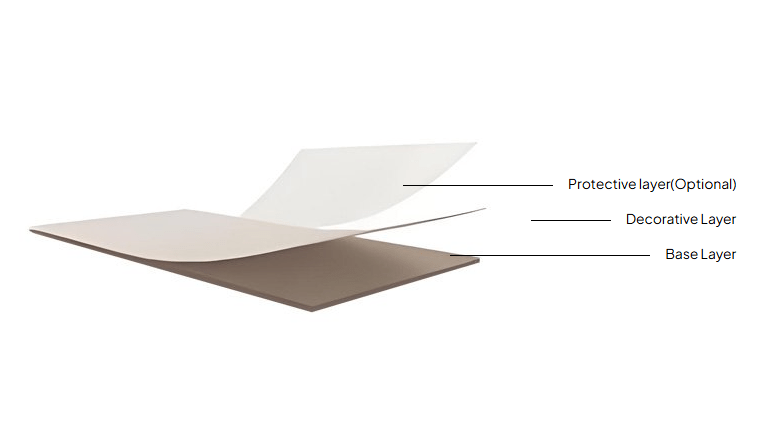
HPL (High Pressure Laminate) is made by pressing multiple layers of paper with thermosetting resins under high temperature and pressure. The core structure usually includes:
- Kraft paper (often wood-based fiber)
- Decorative paper (design layer)
- Melamine and phenolic resins
According to environmental product assessments, a large part of HPL is based on cellulose (wood fiber), which is a renewable raw material when sourced responsibly
1. Uses Responsible Wood Sources (FSC Certified)
One of the most important environmental advantages of HPL is that its paper layers can be sourced from responsibly managed forests.
The FSC (Forest Stewardship Council) certification ensures that the wood used in production comes from forests that are:
- Responsibly managed
- Legally harvested
- Environmentally protected
- Socially beneficial for local communities
For buyers, FSC certification provides clear traceability of raw materials and helps reduce the risk of illegal logging or unsustainable forestry practices.
At REXIN, wood-based materials are sourced with FSC certification, supporting responsible procurement and more sustainable building solutions.
2. Long Lifespan Reduces Waste
HPL is extremely durable:
- Scratch-resistant
- Moisture-resistant
- Heat-resistant
- Impact-resistant
Because it lasts longer than many traditional surface materials, it reduces the need for replacement. A longer lifespan means less material waste over time, which is a key factor in sustainability.
3. Contains Recycled or Reusable Materials
Some HPL products include recycled wood fibers or are made from wood by-products that would otherwise be discarded.
This helps reduce pressure on natural forests and supports a more circular use of resources.
4. Low Maintenance = Lower Environmental Impact
HPL surfaces are easy to clean and do not require frequent painting, sealing, or chemical maintenance.
That means:
- Fewer cleaning chemicals used
- Lower maintenance emissions
- Reduced lifecycle environmental footprint
5. Supports Green Building Certifications
Many HPL products can contribute to green building systems such as:
- LEED credits
- Low-emission material requirements
- Environmental Product Declarations (EPD)
These certifications help architects and contractors meet sustainability targets in modern construction projects.
What Are the Environmental Concerns of HPL?
While HPL has many eco-friendly benefits, it is still a man-made composite material, so it has some environmental considerations:
1. Resin Content
HPL contains phenolic and melamine resins, which are not renewable materials.
2. Energy-Intensive Production
The manufacturing process involves high heat and pressure, which consumes energy.
3. End-of-Life Recycling Can Be Complex
Although some HPL systems can be recycled or used for energy recovery, full recycling is not always simple depending on the substrate.
FSC Certification Makes a Big Difference
The environmental performance of HPL improves significantly when the wood fiber used is FSC-certified.
For companies like REXIN, FSC certification means:
- Responsible forest management
- Traceable raw material sourcing
- Support for sustainable forestry ecosystems
This is a key reason FSC-certified HPL is widely preferred in international building projects.
Learn more about our sustainability approach:
https://rexinhpl.com/sustainability/
Is HPL a Sustainable Choice Overall?
Yes—HPL can be considered environmentally friendly when responsibly sourced and certified.
It is especially sustainable when:
- It uses FSC or PEFC certified paper
- It has long service life in real applications
- It is produced under environmental standards (such as REACH compliance or EPD documentation)
- It replaces less durable natural materials that require frequent replacement






Final Thoughts
HPL is not a “perfectly natural” material, but in modern construction, it is considered a balanced and responsible choice when:
- It comes from certified forests
- It is designed for long-term use
- It reduces waste and replacement cycles
In short, HPL is environmentally friendly when responsibly manufactured and properly selected.
For further questions, please contact us at Export@rexinhpl.com.